ORBITA ERP SaaS Dashboard: A Modern, Scalable Solution for Enterprise Resource Management
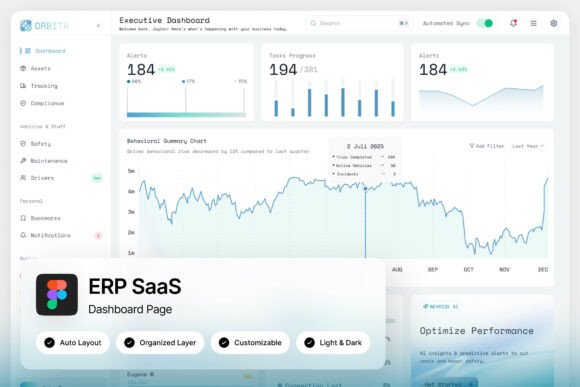
The ORBITA ERP SaaS Dashboard is a structured, light-themed user interface designed for enterprise resource planning (ERP) systems. With its clean blue-and-white layout, it offers a visually appealing and functional space for managing operations, tracking key performance indicators (KPIs), and navigating multiple modules. This dashboard is ideal for teams working on ERP software, enterprise UX designers, and SaaS companies focused on resource management tools.
Key Features of the ORBITA ERP SaaS Dashboard
The ORBITA ERP SaaS Dashboard stands out for its high-quality design and usability. It features a resolution of 1440×1024 pixels, ensuring clarity and scalability across different devices. The unique, stylish, and modern design makes it easy to navigate and customize, catering to both developers and designers looking for a professional foundation.
One of the most notable aspects of this dashboard is its fully customizable nature. Users can easily edit and adapt the interface to suit their specific needs. The pixel-perfect layout ensures that every element aligns precisely, contributing to a polished and professional appearance. Additionally, the well-organized layers make it simple to locate and modify individual components without disrupting the overall structure.
The inclusion of free Google Fonts adds versatility to the design, allowing users to experiment with typography while maintaining a cohesive look. The availability of both light and dark mode interfaces further enhances usability, making it suitable for different working environments and user preferences.
What You Get in the ZIP File
The ORBITA ERP SaaS Dashboard comes with a comprehensive set of files to support development and customization. The Figma file (.fig) provides a detailed visual blueprint, enabling designers to make adjustments and iterate on the design efficiently. A help guide (.pdf) is included to assist users in understanding the layout and functionality of the dashboard.
Font links (.txt) ensure that users can access the necessary typography without additional setup. It's important to note that the images shown in previews are for demonstration purposes only and are not included in the download files. This means users will need to source their own visuals or create custom ones to fit their branding and project requirements.
Practical Applications and Real-World Use
In real-world scenarios, the ORBITA ERP SaaS Dashboard serves as a valuable tool for managing complex enterprise workflows. Its focus on operations summaries, resource planning charts, and department KPIs allows teams to monitor performance metrics in one centralized location. This can lead to more informed decision-making and improved efficiency across departments.
The multi-module navigation feature ensures that users can switch between different sections of the ERP system seamlessly. Whether managing inventory, tracking sales, or analyzing financial data, the dashboard provides a structured approach to accessing critical information. This level of organization is essential for large-scale operations where clarity and accessibility are paramount.
For developers and designers, the flexibility of the ORBITA dashboard is a major advantage. The ability to customize layouts, adjust color schemes, and integrate with existing systems makes it a versatile choice for a wide range of projects. Its scalability also means that it can grow alongside an organization’s needs, adapting to new requirements without requiring a complete redesign.
Strengths and Usability
The strengths of the ORBITA ERP SaaS Dashboard lie in its clarity, consistency, and reliability. The clean design minimizes visual clutter, allowing users to focus on the most important data without distractions. This is particularly beneficial for professionals who need to process large amounts of information quickly and accurately.
Usability is another strong point. The intuitive layout and logical flow of the interface reduce the learning curve for new users. Teams can start using the dashboard effectively with minimal training, which is a significant advantage for organizations looking to implement ERP solutions efficiently.
Reliability is also a key factor. The dashboard is built to handle complex data sets and maintain performance under varying conditions. This ensures that users can depend on it for critical business functions without experiencing downtime or performance issues.
Who Benefits Most from ORBITA ERP SaaS Dashboard?
The ORBITA ERP SaaS Dashboard is particularly useful for ERP software teams that require a professional and adaptable UI. It provides a solid foundation for building custom dashboards that meet the specific needs of their clients. For enterprise UX designers, the structured layout and organized layers make it easier to create consistent and scalable designs.
SaaS companies developing resource management tools will find the dashboard especially valuable. Its modern aesthetic and customizable features allow these companies to deliver a polished product that aligns with industry standards. Additionally, the inclusion of dark mode and responsive design elements ensures compatibility with a wide range of user preferences and device types.
Small business owners and entrepreneurs who are looking to streamline their operations may also benefit from using the ORBITA dashboard as a reference or starting point. While it is not a ready-to-use application, its design principles can inspire the creation of more efficient and user-friendly interfaces for internal use or client-facing tools.
Considerations and Limitations
While the ORBITA ERP SaaS Dashboard offers many advantages, there are some limitations to consider. The lack of pre-designed images means that users must source or create their own visual assets, which could be time-consuming for those without graphic design experience. Additionally, the dashboard is primarily focused on the UI aspect, so it may require integration with backend systems or APIs to function as a complete solution.
Another consideration is the need for technical expertise. While the design is user-friendly, customization and implementation may require a certain level of familiarity with design tools like Figma and web development practices. This could be a barrier for users who are not experienced in these areas.
Despite these limitations, the ORBITA dashboard remains a valuable resource for those looking to build or improve ERP interfaces. Its emphasis on clarity, scalability, and usability makes it a strong choice for professionals seeking a reliable and adaptable design solution.
Conclusion
The ORBITA ERP SaaS Dashboard is a well-crafted UI that offers a balance of aesthetics and functionality. Its structured layout, customizable features, and modern design make it a practical choice for ERP software teams, enterprise UX designers, and SaaS companies. While it requires some technical input for full implementation, its strengths in usability, reliability, and scalability provide long-term value for users who prioritize clarity and efficiency in their workflows.